-

Email Us
sale@lscmagnetics.com -

Contact Number
+86 -13559234186
Email Us
sale@lscmagnetics.comContact Number
+86 -13559234186

In reinforced concrete construction, rebar tying is a critical step. As demands for construction efficiency continue to rise, fully automatic rebar tying machines are rapidly replacing traditional manual methods, earning their reputation as "productivity boosters" on job sites. But just as a car requires the right fuel, getting the best performance from your tying machine starts with one essential step: selecting the right tying wire.
Today, we’ll walk you through how to choose the most suitable "partner" for your rebar tying machine—the tying wire itself.
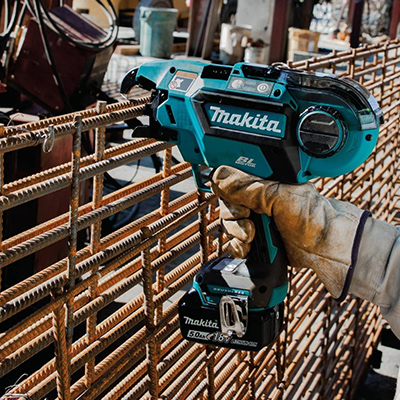
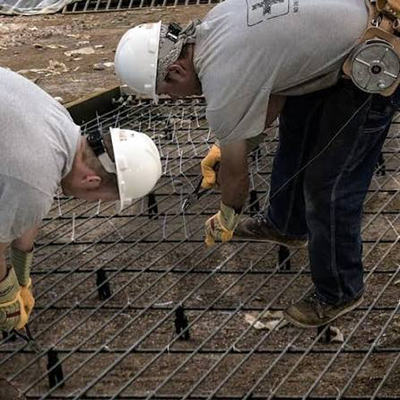
It’s a common misconception that tying wire is simply ordinary iron wire. In fact, wire designed specifically for automatic tying machines comes with strict requirements in terms of material, diameter, and spooling method. Its primary role isn’t to add structural strength, but to securely hold rebar in its designated position during concrete pouring, preventing displacement caused by vibration or the weight of wet concrete.
Wire diameter is the most critical specification to get right. Too thin, and it lacks tensile strength and breaks easily; too thick, and it may exceed the machine’s capacity, leading to jams or even mechanical damage.
0.8 mm (approx. 21 gauge): This is the standard size for most small to medium-sized handheld rebar tying machines. It is typically used for tying rebar up to 12 mm in diameter, with the machine compensating for the thinner wire by applying multiple wraps (e.g., 3 turns) to ensure adequate holding force.
1.0 mm (approx. 19 gauge): Commonly found in dual-wire binding systems or applications requiring higher joint strength. Some professional-grade brands, such as MAX, promote 19-gauge wire for its ability to deliver stronger, more reliable ties through double-wire wrapping.
1.6 mm: Reserved almost exclusively for heavy-duty applications. Advanced automated systems like the X-TIE use 1.6 mm wire—twice the diameter of conventional hand-tying wire—delivering shear strength approaching that of welded joints, making it ideal for large rebar cages in high-stakes structural work.
Bottom line: Always consult your machine’s user manual first to confirm the supported wire diameter range.
The wire material directly affects flexibility, workability, and long-term durability.
Annealed black iron wire (also known as fire-treated wire): The most widely used type. The annealing process softens the wire, making it more pliable and easier to twist and knot. It delivers good tying performance at an affordable cost, and works well for most indoor or general-purpose applications.
Galvanized tying wire: Coated with a layer of zinc for superior corrosion resistance. If your project is located in coastal regions, high-humidity areas, or structures with stringent durability requirements, galvanized wire is the smarter choice—it helps avoid hidden risks caused by rust-induced wire degradation over time.
Epoxy-coated or specially coated wire: Reserved for extreme environments where corrosion resistance is paramount, such as chemical plants or marine engineering projects.
This point cannot be overstated: automatic tying machines almost always require specially spooled wire, not just any coil of iron wire off the shelf.
Proprietary spools: The wire is precision-wound onto spools of a specific size and shape to ensure smooth, uninterrupted feeding into the machine’s internal feeding mechanism.
Standardization trend: The good news is that many mainstream machines (especially common domestic models based on Japanese designs) now use increasingly standardized spool dimensions, making replacement wire widely available from third-party suppliers.
Some higher-end models come with "intelligent" features that sense the diameter of the rebar being tied and automatically adjust the length of wire dispensed for each knot. This "use-only-what-you-need" function minimizes waste and maximizes the number of ties per spool. If your machine supports this feature, using the manufacturer’s recommended or certified wire will help you get the most out of it.
Scenario-Based Selection Strategy
| Construction Scenario | Key Characteristics | Recommended Wire | Additional Notes |
| High-rise building frame | Large-diameter rebar (≥18 mm), dense joints, high seismic requirements | 1.2 mm galvanized wire (meeting GB/T or equivalent standards) | Beam-column joints must be fully tied; stirrup spacing in reinforced zones must follow design specs. |
| Basement & foundation raft slabs | Humid environment, double-layer bi-directional mesh, high volume | 1.0–1.2 mm wire with ≥20 μm zinc coating; consumption approx. 0.8–1.2 kg/m² | Use support bars (stirrups) between upper and lower mats, spaced no more than 1.2 m apart. |
| Bridges & crash barriers | Open-air exposure, extremely high corrosion and strength demands | 22-gauge (0.7 mm) galvanized wire, 20–25 cm length per piece, with at least 3 twists | Longitudinal main bars in barriers are typically HRB400 grade threaded steel, diameter ≥16 mm. |
Knowing the theoretical number of ties per spool helps with budgeting, logistics, and on-site inventory planning. This figure depends mainly on wire diameter and the number of wraps per tie (single or double wire).
| Wire Type | Diameter / Gauge | Compatible Machines (Examples) | Estimated Ties per Spool |
| Fine wire (multi-wrap) | 21 Ga (~0.8 mm) | MAX RB218, RB398 | 90 – 210 |
| Standard wire (dual-wire) | 19 Ga (~1.0 mm) | MAX RB441T, RB611T | 205 – 240 |
| Heavy-duty system wire | 1.6 mm | X-TIE system | ~10,000 (dual-wire mode) |
Three Pitfalls to Avoid
"Thicker is always stronger": Oversized wire (e.g., >1.6 mm) can prevent the machine from engaging properly or may even mar the rebar surface during tying, compromising bond strength with concrete.
"Skipping ties saves material": Critical load-bearing nodes—such as beam-column junctions and corners—must be tied at every intersection. Skipping ties is only acceptable in non-stress-concentrated areas (e.g., middle zones of floor slabs), and even then, spacing should not exceed 3× the rebar diameter.
"Tighter is better": After cinching the knot, leave 2–3 wire turns at the tail. Over-tightening can damage the rebar; under-tightening fails to secure it properly.
On-Site Acceptance Criteria (Based on GB 50204-2015)
The total number of missing or loose ties shall not exceed 10% of all tied joints, and such defects shall not be concentrated in any single area.
The lap length at each tied joint must meet the specified minimum, with firm ties applied at the center and both ends of the lap zone.
Choosing the right tying wire isn’t just about quality assurance—it’s about unlocking the full potential of your automatic tying machine in terms of speed, reliability, and cost-effectiveness. We hope this guide helps you make well-informed decisions, keeping your rebar work efficient, safe, and on schedule.
Whatsapp : +86 -13559234186
Email : sale@lscmagnetics.com
Tel : +86 -13559234186