-

Email Us
sale@lscmagnetics.com -

Contact Number
+86 -13559234186
Email Us
sale@lscmagnetics.comContact Number
+86 -13559234186

In reinforced concrete construction, tie wire—also known as binding wire—is the most basic and widely used auxiliary material for securing steel reinforcement cages. When faced with the two most common options on the market—galvanized tie wire and black annealed tie wire—many project managers and procurement officers find themselves in a familiar dilemma: Which one should I choose? Is cheaper always better? Is galvanizing really necessary?
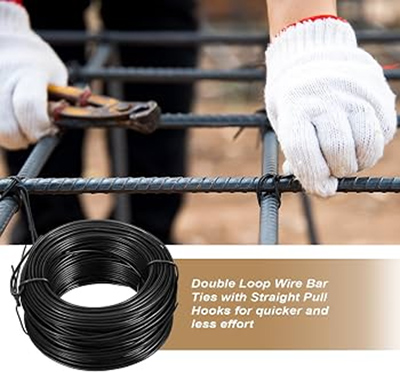
Black annealed tie wire is made from Q195 low-carbon steel wire rod. After cold drawing to the desired diameter, it undergoes an oxygen-free, high-temperature annealing process that realigns the internal grain structure of the steel, significantly improving its flexibility and ductility.
Once annealing is complete, the wire surface is typically coated with a thin layer of rust-preventive oil or black oil, forming a dark oxide protective film—hence the name "black wire."
Galvanized tie wire also uses low-carbon steel as its base material, but after annealing and drawing, it must go through additional steps: pickling (rust removal) → high-temperature annealing → hot-dip galvanizing (or electro-galvanizing) → cooling. This process deposits a dense zinc coating on the wire surface for corrosion protection.
Depending on the galvanizing method, it can be divided into:
Hot-dip galvanized wire: Thicker zinc coating (approximately 18 g/m² or more), superior corrosion resistance, silver-gray matte finish
Electro-galvanized wire: Thinner zinc coating, brighter surface, lower cost
| Parameter | Black Annealed Wire | Galvanized Wire |
| Flexibility | ★★★★★ Excellent, soft and easy to bend, good hand-feel for tying | ★★★☆☆ Good, but slightly stiffer due to zinc coating |
| Tensile Strength | 300–450 N/mm² | 30–45 kg/mm² (approx. 294–441 N/mm²), comparable to black annealed |
| Corrosion Resistance | ★★☆☆☆ Poor, rusts easily in moist environments; relies on oil coating | ★★★★★ Excellent; zinc layer provides sacrificial anode protection |
| Surface Finish | Smooth, soft, black | Slightly rougher (galvanized layer), silvery white |
| Service Life | Short-term / primarily indoor use | Long-term, especially outdoors |
| Cost | Low, high cost-performance | Higher purchase price, but potentially lower long-term total cost |
Thanks to its high flexibility, ease of bending and knotting, and efficient tying, black annealed wire is well suited for:
Indoor structures of ordinary buildings: e.g., residential and office building main reinforcement—once concrete is poured, the rebar is fully encapsulated and not exposed to external conditions
Detailed tying requiring good hand-feel: annealed wire's softness allows steel fixers to complete tie points faster and with less effort
Temporary fixing and reusable applications: e.g., formwork reinforcement, temporary bundling of materials
Budget-sensitive projects: material cost advantage is significant
Common gauges: The most widely used sizes for construction rebar tying are BWG16 (approx. 1.65 mm) for main bars and BWG18 (approx. 1.25 mm) for stirrups or light mesh.
Galvanized wire's core strength is corrosion resistance and durability, making it more suitable for:
Outdoor and exposed-site projects: bridges, tunnels, ports, water conservancy works, where reinforcement cages may be exposed to rain and humid air before concreting
Highly corrosive environments: coastal areas, chemical plants, saline-alkali soil regions, where airborne chloride ions or chemical agents are prevalent
Precast component production: precast beams, panels, etc., often stored in yards for extended periods—galvanized wire prevents premature rusting at tie points
Projects with stringent durability requirements: e.g., critical infrastructure with a 100-year design life
Note: Galvanized tie wire is not recommended for tying stainless steel rebar. In humid conditions, the zinc coating and stainless steel can create a galvanic couple, accelerating pitting corrosion on the stainless steel surface. In such cases, use nylon ties or special stainless steel ties instead.
Many buyers compare only price per ton or per coil, but you should also consider the total cost of ownership:
| Cost Factor | Black Annealed Wire | Galvanized Wire |
| Purchase price | Low (approx. 60–75% of galvanized wire) | High |
| Waste/loss rate | Lower—soft, less prone to breakage | Slightly higher—zinc layer can cause fatigue fracture during bending |
| Corrosion risk cost | Higher if stored poorly or used outdoors—may require rework | Very low |
| Impact on construction time | Normal | Normal |
| Long-term maintenance | May incur repair costs in unsuitable scenarios | Nearly zero |
Bottom line: For standard indoor concrete structures, black annealed wire's cost-effectiveness is hard to beat. For outdoor or corrosive environments, however, the premium for galvanized wire is well justified by avoiding rework and extending service life.
General indoor construction → Black annealed tie wire (BWG16/BWG18)
Outdoor/wet/precast applications → Galvanized tie wire (hot-dip preferred)
Highly corrosive (coastal/chemical) → Consider PVC-coated tie wire or stainless steel wire
No matter which type you choose, inspect the following upon arrival:
Uniform wire diameter: avoid local thinning that reduces strength
Surface quality: black annealed wire should be evenly oiled and free of rust spots; galvanized wire should have a complete zinc layer with no bare spots
Bend test: repeatedly bend a sample by hand—no breakage or large-scale zinc flaking should occur
Certificates and test reports: confirm that tensile strength, elongation, zinc coating weight, and other indicators meet applicable national standards
Black annealed wire: must be stored in a dry, well-ventilated warehouse, elevated off the floor and covered with waterproof sheeting. If stacked outdoors or on damp ground, even unopened coils may develop localized rust within 2–3 months.
Galvanized wire: corrosion-resistant, but still best kept under cover to avoid premature aging of the zinc layer in extreme conditions.
There is no absolute right or wrong—only what fits the job.
Prioritize black annealed wire when:
Tying internal beams, slabs, and columns in ordinary buildings
Producing precast elements in dry environments
Working on large-scale general-purpose projects with tight cost controls
Tying complex, irregularly shaped rebar that demands maximum flexibility
Choose galvanized wire when:
Tying exposed outdoor reinforcement (e.g., edge protection, scaffold ties)
Working in humid or highly corrosive environments (harbors, wastewater plants, chemical facilities)
Using fair-faced concrete or projects with strict appearance requirements (to prevent rust stains from bleeding through)
Producing high-end or export-grade precast components
Whether you opt for the user-friendly softness of black annealed wire or the corrosion-resistant durability of galvanized wire, both play indispensable roles in steel reinforcement work. When deciding, consider the environment (wet or dry), the location (exposed or embedded), and the total cost—only then will this small but vital component deliver maximum value.
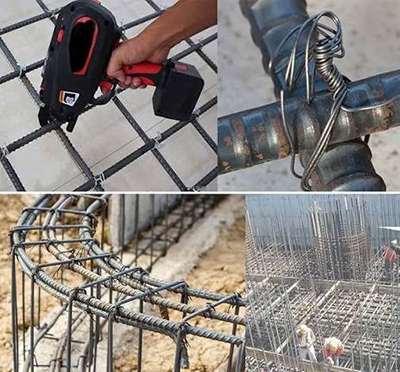
Quick Tip: According to national standards and field practice, use No. 22 wire for bars up to 12 mm in diameter, No. 20 wire for bars 12–16 mm, and two strands of No. 22 wire for larger diameters. Using a reverse twist tie (cruciform or figure-eight knot) helps prevent loosening effectively.
Whatsapp : +86 -13559234186
Email : sale@lscmagnetics.com
Tel : +86 -13559234186