-

Email Us
sale@lscmagnetics.com -

Contact Number
+86 -13559234186
Email Us
sale@lscmagnetics.comContact Number
+86 -13559234186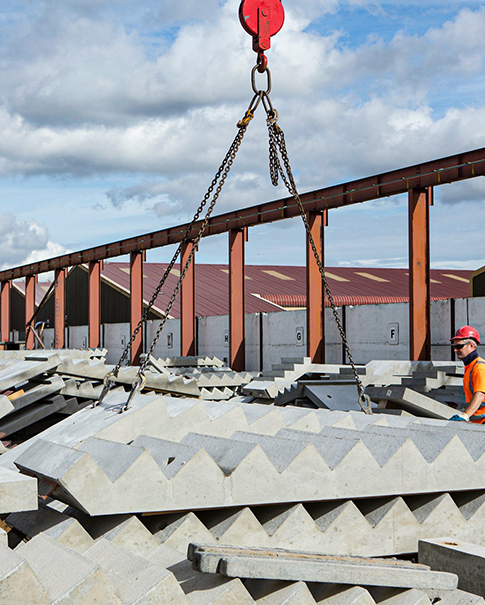

The drive for efficiency, precision, and sustainability in construction has been powerfully answered by a transformative technology: precast concrete formwork. This method, based on the standardized factory production of concrete components followed by on-site assembly, is now a cornerstone of industrialized building.
More than just a product, precast concrete formwork is a comprehensive system. It includes a wide range of standard and custom components, such as solid wall panels, composite floor slabs, stairs, balconies, beams, and columns. Its foundational principle—"factory fabrication, on-site assembly"—delivers fundamental improvements in building quality, construction speed, and project sustainability.
Key Application Areas
I. Building Construction
In this sector, precast formwork is primarily used to manufacture structural elements like beams, columns, wall panels, stairs, and floor slabs. Produced in a controlled factory setting and then assembled on-site, this approach greatly enhances efficiency and shortens project timelines. For high-rise residential buildings, in particular, using precast walls and slabs reduces wet trades on-site, minimizes noise and dust pollution, and improves the structure's overall quality and durability.
II. Bridge Engineering
Bridge construction is another major application. Precast components such as box girders, T-beams, and piers are manufactured using high-precision formwork. This ensures consistent quality and significantly accelerates construction, making the process more efficient and environmentally friendly while reducing traffic disruption.
III. Municipal Engineering
Precast formwork is widely used in municipal projects for manufacturing utility tunnels, subway tunnel segments, and inspection chambers. These prefabricated solutions boost construction efficiency and minimize impact on urban traffic and daily life. For instance, integrated utility tunnels can be factory-built and rapidly installed underground, drastically cutting construction time.
IV. Industrial Construction
For large factory buildings, precast concrete formwork is used to produce columns, beams, and roof panels. Prefabrication enhances component precision and quality while reducing on-site construction time and costs. In large steel-structure factories, precast concrete foundations and columns ensure structural stability and longevity.
V. Water Conservancy Engineering
This technology is also applied in water conservancy projects for elements like dam sections, sluice gates, and channels. Using precast components improves construction efficiency and quality while mitigating water pollution. In dam construction, for example, precast formwork guarantees the precision and strength required for effective flood control and long service life.
VI. Architectural Decoration
Beyond structural applications, precast concrete formwork facilitates architectural expression. Decorative screens, columns, and facade panels can be custom-formed, combining aesthetic appeal with ease of installation, which streamlines construction schedules.
Why Choose Precast Formwork?
The advantages of precast concrete formwork stem from its industrialization of the construction process, offering four key benefits:
1. Superior and Reliable Quality: Factory-controlled production allows precise management of concrete mix, pouring, and curing. This eliminates variables like weather and on-site inconsistencies, yielding components with uniform strength, high durability, and excellent finish.
2. Enhanced Construction Efficiency: By shifting most wet trades to the factory, on-site work focuses on efficient assembly. This parallel workflow can “shorten project timelines by 30-50%”, accelerating overall progress.
3. Optimized Overall Cost: While individual component costs may be higher, significant savings are achieved through reduced on-site labor, lower material waste, decreased management overhead, and shorter project durations, leading to favorable lifecycle economics.
4. Green and Sustainable Construction: Factory production drastically cuts on-site waste, dust, and noise. Reusable formwork and minimized material loss contribute to a smaller environmental footprint, while the high precision of components improves building energy performance, aligning with green building goals.
Whatsapp : +86 -13559234186
Email : sale@lscmagnetics.com
Tel : +86 -13559234186