
-

Email Us
sale@lscmagnetics.com -

Contact Number
+86 -13559234186
Email Us
sale@lscmagnetics.comContact Number
+86 -13559234186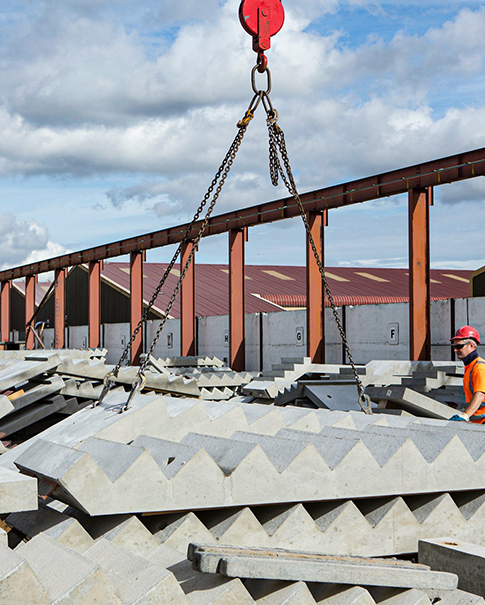

Why Contractors Prefer Precast Concrete Formwork for Modern Buildings?
Dec 26, 2025With the development of the construction industry, precast concrete formwork is becoming increasingly popular among contractors in modern construction. This trend has not only brought improvements in efficiency and quality but also had a positive impact on project timelines and costs. Below, we explore why contractors prefer to use precast concrete formwork.
01 Speed and Efficiency
In today's fast-paced construction market, time is money. One of the most significant advantages of precast concrete formwork technology is the substantial reduction in construction time.
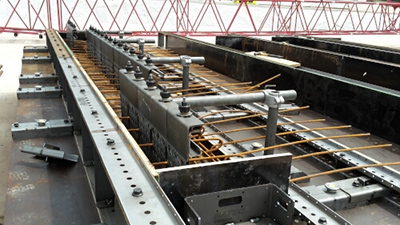
By manufacturing components in factories, on-site work only requires hoisting and connection. Compared to traditional construction methods, this technology greatly increases construction speed.
Specifically, using precast components can shorten the construction cycle by 30%-50%. This means commercial buildings can be put into use faster, residential projects can be delivered earlier, and the return on investment cycle is significantly shortened.
For contractors, shorter construction periods not only mean faster cash flow but also reduce the impact of uncontrollable factors such as weather on the project.
02 Quality and Precision
Walking into a building constructed using precast concrete formwork, you might notice smoother walls and more precise dimensions. This is another core advantage of precast technology: superior quality control.
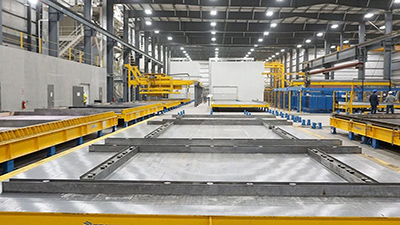
Concrete components produced in a factory environment can have dimensional errors controlled to the millimeter level, a precision far exceeding that of on-site casting.
The factory production environment places the curing, temperature, and mixing design of the concrete under strict monitoring. Each component undergoes quality testing before leaving the factory to ensure that its strength and durability meet design requirements.
This controlled production environment means that the building structure's performance is more stable and reliable, reducing the quality fluctuations common in traditional construction.
03 A New Perspective on Cost
When discussing precast concrete formwork, many people's primary concern is cost. Indeed, the initial price of precast components may be higher than that of traditional materials.
However, from a life-cycle cost perspective, precast technology demonstrates significant economic advantages. With technological advancements and large-scale production, the potential for cost improvement is continuously expanding.
Take molds as an example: traditional wooden formwork can typically only be used 3-5 times, while aluminum formwork can be reused 150-300 times. Large-scale production can increase mold turnover from the industry average of 50 times to 200 times, resulting in a mold cost reduction of up to 75%.
As production scale increases, fixed costs are spread across more products, naturally reducing unit costs. Research has found that doubling the size of a prefabricated project can reduce incremental costs by 47%.
04 Green Advantages
With the concept of sustainable development gaining widespread acceptance, the environmental advantages of precast concrete technology are becoming increasingly prominent.
Factory production significantly reduces waste of building materials on construction sites. Traditional construction consumes a large amount of materials through formwork turnover, while precast technology greatly reduces resource waste by reusing formwork.
Precast concrete construction also effectively reduces noise and dust pollution. The enclosed environment of factory production controls noise, and on-site assembly reduces a significant amount of high-noise work. At the same time, on-site wet work is greatly reduced, contributing to environmental protection and minimizing construction disturbance to residents. With the advancement of the "dual-carbon strategy," this green building technology is receiving more policy support.
FAQ regarding precast concrete formwork
Q1: What cleaning and damage checks are required for precast concrete formwork before use?
A1: Before use, the formwork should be clean, undamaged, and accurately sized and aligned. Check for deformation, cracks, or other damage to ensure it provides the required shape and dimensional accuracy.
Q2: What are the key points for inspecting reinforcing bars and embedded parts?
A2: Reinforcing bars should be cut, bent, and placed according to the design drawings, meeting spacing requirements. Embedded parts (such as hoisting anchors, pipes, and inserts) should be correctly placed according to the layout plan.
Q3: What are the key inspection points during concrete pouring and demolding?
A3: Concrete should be poured evenly and vibrated thoroughly to eliminate air bubbles. Release oil should be applied correctly to ensure smooth demolding. Demolding time should be adjusted according to temperature and curing conditions.
Q4: What does the curing and strength monitoring of precast concrete include?
A4: Curing methods (such as water spraying, curing blankets, curing films) should be selected based on weather conditions. Temperature and humidity need to be controlled during the early strength development process. Compressive strength samples should be tested periodically (e.g., at 7 days and 28 days).
Q5: What are the standards for dimensional tolerances and surface defects inspection of precast concrete units?A5: Dimensional tolerances (length, width, depth, warpage) should conform to design specifications. The surface should be inspected for honeycomb, cracks, or other defects.
Q6: What precautions should be taken during the storage, handling, and transportation of precast concrete units?
A6: Precast units should be stored on a flat surface with appropriate support to prevent warping. Before handling, the hoisting anchor points should be checked to ensure no damage occurs during handling and transportation.
Q7: What are the requirements for acceptance and recording of precast concrete units?
A7: Units should be clearly marked with their type, location, and pouring date. All inspection and test results should be recorded and archived for traceability.
Whatsapp : +86 -13559234186
Email : sale@lscmagnetics.com
Tel : +86 -13559234186