-

Email Us
sale@lscmagnetics.com -

Contact Number
+86 -13559234186
Email Us
sale@lscmagnetics.comContact Number
+86 -13559234186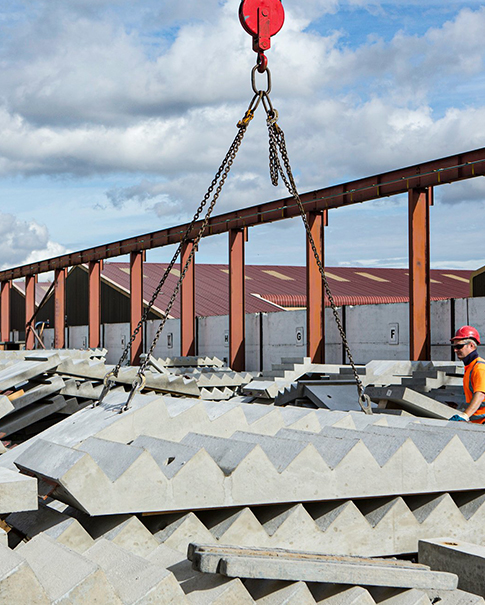

Ore sorting and metal scrap refining—these seemingly simple "iron-attracting" operations are actually among the most technologically advanced sorting processes in modern industry. From raw ore extracted from the ground to high-grade concentrate, and from mixed municipal waste to recyclable metal raw materials, magnetic solutions remain a core technology throughout the mining and recycling value chain.
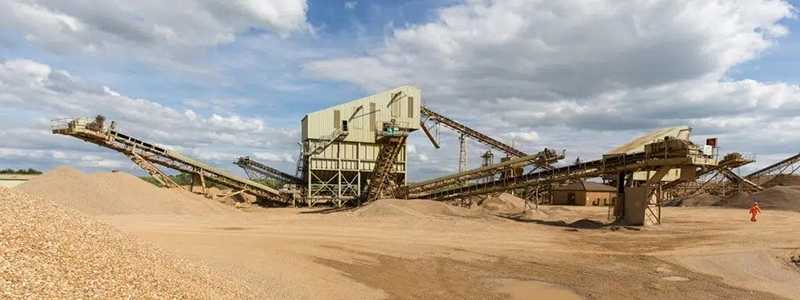
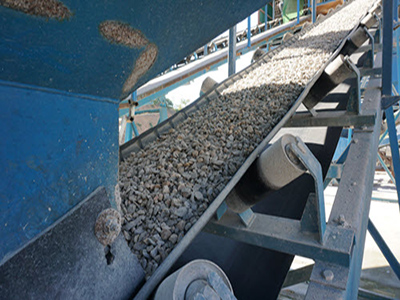
After raw ore is mined, the vast majority of it is gangue (useless rock), while the content of valuable minerals is often only a few percent or even lower. Magnetic separators (such as permanent-magnet drum separators and high-gradient magnetic separators) exploit differences in the magnetic properties of minerals to achieve separation:
Magnetic minerals such as magnetite and hematite can be efficiently enriched, significantly increasing the grade of the ore fed into the furnace.
Pre-removing gangue can significantly reduce energy consumption and throughput in subsequent crushing, grinding, and flotation processes.
Studies have shown that grinding typically accounts for more than 50% of the total energy consumption of a concentrator, and pre-removing tailings through magnetic separation can reduce the amount of material fed into the mill by 20%–40%, resulting in direct and considerable energy savings.
For ores with fine-grained dissemination, high oxidation levels, or complex compositions, traditional gravity separation and flotation have limited efficiency. High-gradient magnetic separation (HGMS) and superconducting magnetic separation can capture micron-sized weakly magnetic particles, giving previously "undevelopable" resources economic value. This directly expands resource boundaries and extends the service life of mines.
Kaolin, quartz sand, feldspar, and other non-metallic minerals are extremely sensitive to iron impurities. Magnetic separation can reduce the Fe₂O₃ content to below 0.05%, meeting the requirements for ceramics, glass, and electronic-grade materials—without magnetic separation, these high-value-added products would be virtually impossible to produce industrially.
Approximately 30% of global crude steel production comes from scrap steel. On the scrap steel processing line:
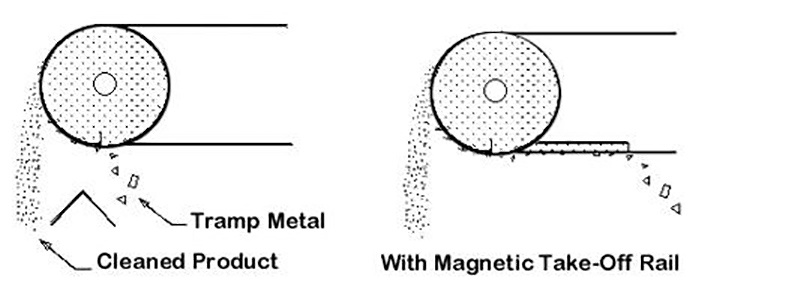
Suspended permanent-magnet/electromagnetic separators are installed above the belt conveyor to initially grab large pieces of ferromagnetic metal.
Magnetic drums and eddy current separators (ECS) work in tandem to precisely separate ferrous metals from non-magnetic non-ferrous metals (aluminum, copper, zinc).
Although eddy current separation relies on the principle of electromagnetic induction (repulsive force), its separation logic is based on a magnetic system, making it an indispensable part of the scrap steel line. Without an efficient magnetic separation front end, non-ferrous metal separation is impossible.
Electronic waste (WEEE) is known as "urban mining," and the metal value of a ton of scrap circuit boards far exceeds that of primary ore. Magnetic separation systems can quickly separate ferromagnetic components, protecting subsequent crushing and sorting equipment while simultaneously recovering large amounts of reusable steel—this is the engineering foundation for turning the "circular economy" from a slogan into reality.
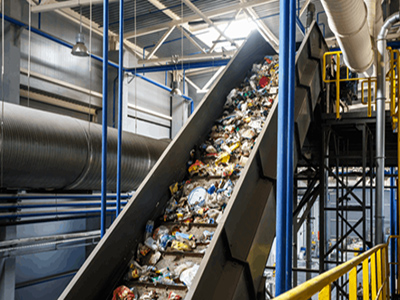
At the upstream end of construction waste and municipal solid waste processing lines, a high-powered magnetic separator acts as a safety net: it removes mixed-in iron parts and reinforcing bars, preventing abnormal wear or even damage to crusher hammers and blades. The reduced downtime and lower maintenance costs resulting from equipment protection often far outweigh the initial investment in the magnetic separator itself.
Whether in mining or recycling, the value of magnetic separation technology can be summarized in four points:
| Core Value | Significance for Mining | Significance for Recycling |
| Quality Improvement | Increases concentrate grade and recovery rate | Increases the purity of recycled metals, resulting in better selling prices |
| Cost Reduction | Reduces feed volume into the mill, lowering energy and reagent consumption | Extends equipment lifespan, reducing downtime |
| Efficiency Enhancement | Continuous and automated separation with high throughput | Separation speed matches high-speed production lines |
| Green | Dry magnetic separation saves water and reduces tailings | Reduces landfill and lowers pressure on primary ore mining |
Especially in the context of "dual carbon" goals (carbon peaking and carbon neutrality), dry magnetic separation requires no water and produces no wastewater, making it more environmentally friendly than traditional wet beneficiation. It is becoming the preferred choice for mines in arid regions and environmentally sensitive areas.
Magnetic separation technology has never stopped evolving:
The widespread application of rare earth permanent magnet materials (neodymium-iron-boron) enables equipment with higher magnetic field strength, lower energy consumption, and maintenance-free operation.
Intelligent sensor-based sorting is being combined with magnetic separation to achieve multi-dimensional identification using "magnetic separation + X-ray/laser."
Superconducting magnetic separation is becoming practical, opening up new possibilities for the separation of weakly magnetic minerals.
Modular equipment and digital monitoring allow for real-time optimization of separation efficiency and equipment status.
For mining and recycling companies, magnetic separation is no longer a simple matter of "installing a magnet," but a systematic solution that requires deep integration with process design and material characteristics.
According to data reports, the global market size for magnetic separation in the mining sector reached approximately US$43.26 billion in 2025 and is projected to grow to over US$70 billion by 2034, with a compound annual growth rate of approximately 5.5%. Behind these figures lies the industry's real demand for efficient separation methods.
Whatsapp : +86 -13559234186
Email : sale@lscmagnetics.com
Tel : +86 -13559234186