
-

Email Us
sale@lscmagnetics.com -

Contact Number
+86 -13559234186
Email Us
sale@lscmagnetics.comContact Number
+86 -13559234186

What Conditions Must High-Quality Binding Wire for Rebar Tying Machines Meet?
Sep 29, 2026On construction sites, the efficiency advantages of rebar tying machines are increasingly recognized. However, many construction companies run into a common problem after introducing the equipment: frequent wire jamming, insecure tying, and a high wire breakage rate. The root cause is often not the machine itself, but rather the wrong choice of binding wire.
Automatic rebar tying machines have vastly different requirements for binding wire compared to traditional manual tying. With manual tying, workers can adjust force and angle at any time based on feel, whereas machines rely on precise mechanical actions—feeding, wrapping, twisting, and cutting—each of which places strict, consistent demands on the physical properties of the binding wire.
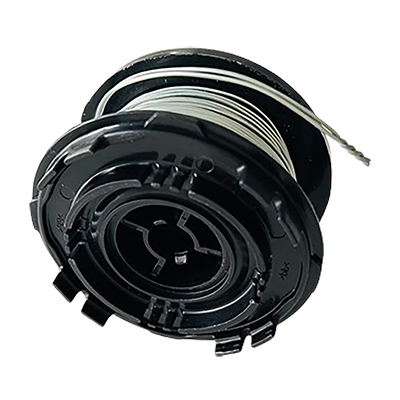
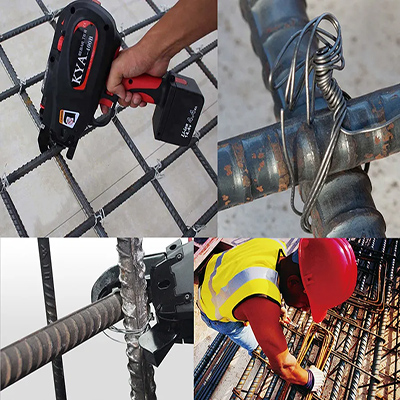
When a tying machine is operating, the binding wire must be pulled, bent, and wrapped around the rebar by the mechanical structure before finally being twisted. This process requires the wire to have sufficient flexibility to handle bending and wrapping, along with sufficient strength to ensure it does not loosen after twisting.
Ideally, the binding wire should undergo annealing, resulting in a "dead-soft" state. Annealing significantly improves the plasticity of low-carbon steel wire, making it less prone to breaking during machine tightening. It also holds its shape after tightening, truly achieving "easy to tighten, difficult to loosen."
If the binding wire is too stiff, resistance during machine tightening increases, which can easily overload the drive mechanism or cause the wire to snap at the knot. If it is too soft, it lacks sufficient spring-back after tightening, making the binding point prone to loosening.
The diameter of the binding wire is a crucial factor determining whether it can be used smoothly. Different models of tying machines have specific ranges of compatible wire diameters.
For handheld automatic tying machines, the commonly compatible wire diameter is 0.8 mm (approximately gauge 21), which is also the standard wire specification for mainstream models such as the MAX series. Industrial-grade rebar tying machines, due to their greater binding force, typically use 1.2 mm to 2.0 mm binding wire.
When selecting wire, avoid a "good enough" approach. If the diameter is too large, the wire cannot pass smoothly through the feeding channel and will jam; if the diameter is too small, the binding force is insufficient, and the rebar cage is prone to shifting during pouring.
The surface treatment of the binding wire directly affects its performance under specific working conditions.
Galvanized binding wire is the most common choice. The galvanized layer effectively isolates air and moisture, delaying rust. For rebar tying operations that involve long storage periods or humid environments, galvanized wire is the more reliable choice. Galvanizing processes fall into two categories: hot-dip galvanizing and cold galvanizing. Hot-dip galvanizing produces a thicker coating and better corrosion resistance, but it is also more expensive.
Black annealed wire is another common option. It is not galvanized and has a black oxide layer on the surface. Its rust resistance is limited, but it is cheaper and softer, making machine tightening smoother. In dry environments, or when concrete is poured soon after tying, black wire is perfectly adequate—the alkaline environment of concrete itself can passivate rust.
Plastic-coated binding wire is a solution for special scenarios. When tying epoxy-coated rebar, ordinary steel wire may scratch the coating. In such cases, plastic-coated binding wire is needed to provide additional protection.
Automatic tying machines have specific requirements for the tensile strength of the binding wire. If the strength is too low, the wire breaks easily during twisting; if it is too high, it may exceed the machine's design load.
In industry practice, the tensile strength of binding wire suited to automatic tying machines usually falls between 420 MPa and 550 MPa. This range represents the balance point between flexibility and strength: flexible enough for the machine to complete the wrapping action with ease, yet strong enough to ensure the binding point can withstand the impact and vibration of concrete pouring.
Binding wire is usually supplied in the form of coils or spools. For automatic tying machines, the quality of the coiling directly affects how smoothly the wire feeds.
High-quality binding wire should be neatly arranged with uniform tension when wound. Loose winding and interlacing can easily cause tangling or jamming during machine feeding. The widespread adoption of quick-change spool systems has made changing wire rolls more convenient, but this requires the wire roll's specifications to be compatible with the equipment.
In addition, the surface of the binding wire should be clean, free of oil and rust. Oil affects the friction of the feeding wheel, causing slippage; rust increases frictional resistance and can even block the feeding channel.
Choosing binding wire may seem simple, but it directly affects the efficiency and tying quality of the machine. Flexible annealing treatment, precise diameter specifications, suitable surface treatment, a reasonable strength range, and consistent winding quality—these five conditions are all indispensable.
Construction companies are advised to take samples and test them on actual equipment before bulk purchasing, to confirm smooth wire feeding, secure knots, and an acceptable breakage rate. Only by choosing the right binding wire can a tying machine truly deliver its efficiency advantages.
Whatsapp : +86 -13559234186
Email : sale@lscmagnetics.com
Tel : +86 -13559234186