
-

Email Us
sale@lscmagnetics.com -

Contact Number
+86 -13559234186
Email Us
sale@lscmagnetics.comContact Number
+86 -13559234186

Black Annealed Steel Wire vs. Galvanized Rebar Binding Wire: Understanding the Differences and Choosing the Right One
Oct 21, 2026On construction sites, tying rebar is a seemingly minor yet indispensable task. The thin coil of wire in a worker's hand directly affects the stability of the rebar cage and overall construction efficiency. The two most commonly used binding materials on the market—black annealed steel wire and galvanized rebar binding wire—look similar but differ significantly in price. Many buyers opt for black wire to save money, only to find it rusts in damp environments; others blindly go for galvanized wire, only to find it stiff and painful to work with.
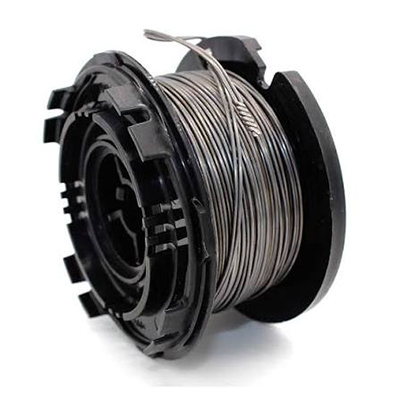
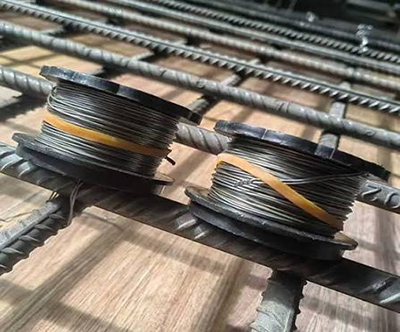
Black annealed steel wire is a soft steel wire made by drawing low-carbon steel (typically Q195) to size and then annealing it at high temperature in an annealing furnace.
Key Features:
High flexibility: Annealing relieves the internal stresses introduced during drawing, making the wire soft and easy to bend. It can be handled easily by hand or with a binding hook, with minimal springback and little risk of breaking.
Black or bluish-black surface: This is an oxide layer formed by slight surface oxidation during annealing—hence the common name "black wire."
No coating protection: The surface oxide layer is very thin, so rust resistance is poor and the wire is prone to rusting in humid environments.
Low cost: The process is simple, and the price is typically about half that of galvanized wire.
Common specifications: 0.7 mm, 0.8 mm, 1.0 mm, 1.2 mm, 1.6 mm, etc., mostly supplied in small coils of 0.5 kg, 1 kg, and 1.5 kg, though larger coils are also available.
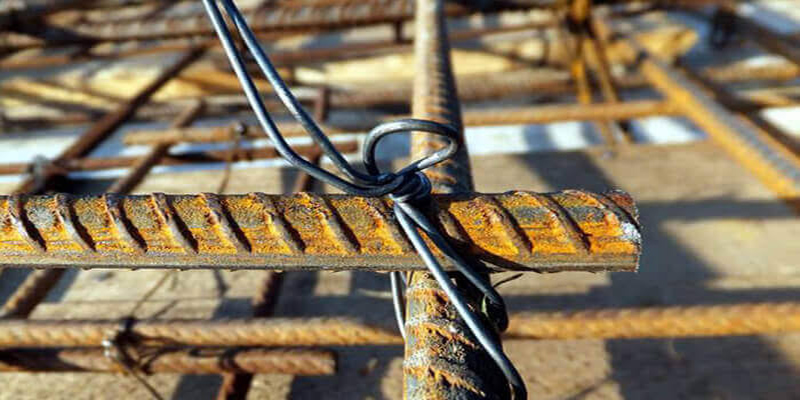
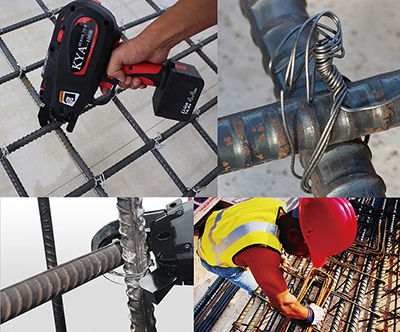
Typical uses: Tying and fixing the intersections of reinforcing bars in reinforced concrete structures; it is the most widely used type of binding wire on construction sites.
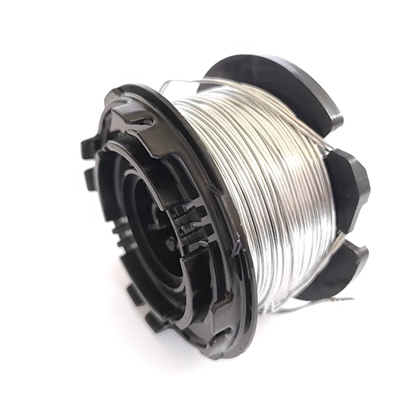
Galvanized rebar binding wire also uses low-carbon steel wire as the base material, but its surface is coated with a layer of zinc by electroplating or hot-dip galvanizing.
Key Features:
Excellent corrosion resistance: The zinc layer protects the substrate through the sacrificial anode principle, resisting rust even when the surface is slightly scratched.
Available in hot-dip galvanized and electro-galvanized forms:
Hot-dip galvanized: Thicker zinc layer (generally ≥20 μm), stronger corrosion resistance, rougher surface, higher price.
Electro-galvanized (cold galvanized): Thinner zinc layer (3–10 μm), brighter appearance, lower price, but weaker corrosion resistance.
Significantly higher cost: For the same specifications, galvanized wire costs approximately 1.5–3 times as much as black annealed wire.
Slightly inferior ductility compared with annealed wire: Galvanizing slightly increases the hardness of the wire, making it feel a little "stiffer" during construction, though standard products still meet the requirements for manual tying.
Typical applications: Applications requiring corrosion resistance, such as water conservancy, marine, and chemical projects, as well as precast component plants and semi-finished rebar that must be stored outdoors for extended periods after tying.
| Comparison Dimension | Black Annealed Steel Wire | Galvanized Rebar Binding Wire |
| Raw material | Low-carbon steel (Q195, etc.) | Low-carbon steel + zinc layer |
| Surface treatment | Annealed oxide layer (black/bluish-black) | Electro-galvanized or hot-dip galvanized (silver-white) |
| Flexibility | ★★★★★ Extremely soft, easy to bend | ★★★☆☆ Medium to hard |
| Rust resistance | Weak; prone to rusting in humid environments | Strong (hot-dip > electro-galvanized) |
| Workability | Good; minimal springback | Fair; requires some force |
| Unit cost | Low (approximately 1/2–2/3 that of galvanized wire) | High |
| Storage requirements | Requires protection from moisture; storage period should not be too long | Durable in storage; not easily degraded |
| Applicable environment | Indoor, dry, short-term before pouring | Damp, outdoor, long-term storage |
| Appearance requirements | Not exposed after pouring, so not an issue | Better suited to exposed parts or decorative surfaces |
1. Consider the environment and construction schedule
In ordinary building construction and bridge main-structure projects, concrete is usually poured shortly after the rebar is tied (within days to several weeks). The alkaline environment of the concrete itself is the best protective layer for the rebar. In this case, black annealed steel wire is perfectly adequate, and there is no need to pay extra for a zinc layer.
However, if the project is located in a coastal, rainy, or humid area, or if the rebar will be stored outdoors for several months before pouring, the protective value of the zinc layer becomes apparent, and hot-dip galvanized binding wire is recommended.
2. Check for exposed surfaces
In areas with high surface-appearance requirements—such as decorative concrete and fair-faced concrete—improper treatment of the binding wire ends can lead to rust and leave rust marks on the concrete surface. In these cases, galvanized wire or stainless steel binding wire should be given priority.
3. Calculate overall costs
Don't look only at the price per coil. Black annealed wire is cheaper but prone to rust, and wastage and rework rates may be higher during the rainy season. Galvanized wire costs more per unit but is easier to store and generates less waste. For bulk purchases, it is advisable to test a small batch first and compare actual construction efficiency and wastage before making a decision.
In short: black annealed steel wire wins on "softness" and "low cost," while galvanized binding wire wins on "rust resistance" and "durability."
Budget-sensitive, short construction period, dry environment → Choose black annealed steel wire.
Humid environment, long-term open-air storage, high corrosion-resistance requirements → Choose galvanized (hot-dip galvanized preferred) binding wire.
There is no absolute answer when it comes to selection. The most cost-effective approach is to make a comprehensive judgment based on the actual project conditions, construction organization, and cost budget.
Whatsapp : +86 -13559234186
Email : sale@lscmagnetics.com
Tel : +86 -13559234186