
-

Email Us
sale@lscmagnetics.com -

Contact Number
+86 -13559234186
Email Us
sale@lscmagnetics.comContact Number
+86 -13559234186

How Magnetic Separators Improve Purity in Precast Concrete Production?
Jun 02, 2026In precast concrete production, the purity and quality stability of the final products directly affect their strength, durability, and market competitiveness. However, a frequently overlooked but serious problem—ferromagnetic impurity contamination—has consistently plagued the industry. Magnetic separators are the key solution to this problem.
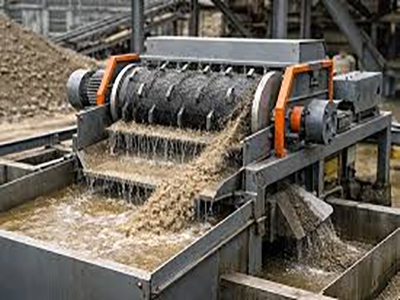
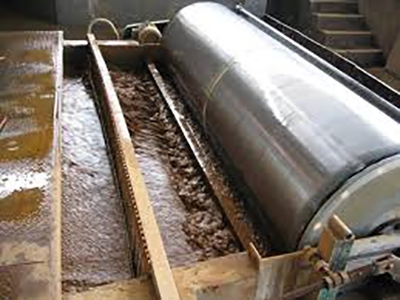
Ferromagnetic impurities in precast concrete come from a wide range of sources: steel bars and wires mixed into recycled aggregates from construction waste, iron filings from equipment wear during ore mining and crushing, and metal components that get mixed in during transportation. Statistics show that magnetic materials account for approximately 3% to 8% of construction waste, with significant variation depending on the source.
These seemingly minor iron impurities pose a considerable threat to precast concrete production. First, they directly affect product quality—when iron filings get mixed into concrete, they form rust spots on the surface of components, compromising appearance. In humid environments, the iron undergoes electrochemical corrosion, and the resulting corrosion products expand to two to four times their original volume, leading to cracking and reduced structural strength. For precast concrete components, cracks caused by internal rust are often hidden yet critical.
Second, iron impurities pose a serious threat to production equipment. Magnetic separators use high-intensity magnetic fields to intercept ferromagnetic impurities at the source. This prevents problems such as entanglement and clogging of screening equipment, stops large or long iron pieces from tearing conveyor belts, and avoids accelerated wear of crusher hammers and liners caused by hard metal objects.
The core working principle of magnetic separators is not complicated: magnetic force is used to separate ferromagnetic impurities from non‑magnetic materials based on differences in their magnetic properties. When material flows through the magnetic separation zone, the strong magnetic field generated by the magnetic system attracts iron particles, "extracting" them from the aggregate and thereby achieving purification.
Based on the type of magnetic source, magnetic separators are mainly divided into two categories:
Permanent Magnet Iron Separator: Utilizing high‑performance rare‑earth permanent magnet materials such as neodymium‑iron‑boron (NdFeB), this type can operate stably and continuously in extreme environments, requires no external power supply, and is suitable for long‑term continuous operation. For example, high‑intensity magnetic separators built with neodymium‑iron‑boron permanent magnets can achieve magnetic field strengths exceeding 10,000 gauss and iron removal rates of over 98%.
Electromagnetic Iron Separator: This type generates a magnetic field by passing direct current through an electromagnetic coil. The field strength can be flexibly adjusted according to process requirements, making it suitable for applications that demand high iron‑removal precision.
Based on installation method, magnetic separators can be categorized into different forms, such as suspended iron separators, magnetic pulley separators, and pipeline iron separators, adaptable to various working conditions including conveyor belts, pipelines, and material discharge ports.
The quality of precast concrete depends primarily on the purity of its raw materials. Before aggregates enter the concrete mixing system, magnetic separators can remove ferromagnetic impurities in advance. According to technical specifications for construction waste treatment, the metal impurity content of pre‑treated materials must not exceed 0.5%. By configuring appropriate magnetic separation equipment, the content of magnetic materials can be reliably controlled within standard limits, allowing recycled aggregates to be used directly in precast concrete production.
From a technical standpoint, advanced magnetic separators can achieve micron‑level deep purification. For instance, the CXJ series high‑intensity magnetic separator, through a four‑stage magnetic separation channel, attains a separation precision of 0.001 mm and can capture iron oxide particles as small as 0.01 mm. The purity of aggregates after magnetic separation is significantly improved, effectively ensuring the surface quality and durability of precast concrete components.
For precast concrete producers, the continuous and stable operation of the production line is crucial. Iron impurities that enter the crusher and mixing system accelerate wear on key components and increase equipment failure rates. If a production line with a daily capacity of 1,000 tons achieves a magnetic separation efficiency of over 98%, it can effectively prevent equipment damage caused by metallic impurities.
In actual concrete batching plant operations, once metallic impurities find their way into machinery, they work between mating surfaces, accelerating wear, scratching those surfaces, and damaging the lubricating oil film. Magnetic separators act as a barrier, intercepting ferromagnetic impurities at the very start of the production process and fundamentally reducing equipment wear and maintenance costs.
For high‑quality precast concrete products, a single magnetic separation stage is often insufficient. The industry commonly employs a graded iron removal strategy of "pre‑magnetic separation + secondary magnetic separation": a pre‑magnetic separator installed before the aggregate enters the main system handles larger particles and quickly removes large steel bars and metal components; a secondary magnetic separator then performs fine iron removal on the crushed fine particles, eliminating small iron wires and metal debris.
The following factors should be considered when selecting a model:
Material characteristics: The particle size distribution, moisture content, and iron content of the aggregate directly affect magnetic separation performance. High‑moisture materials are prone to agglomeration, which can trap iron filings, requiring equipment with stronger penetrating power or a drying pretreatment step.
Magnetic source selection: Permanent‑magnet separators are suitable for 24/7 continuous operation and applications requiring minimal adjustment; electromagnetic separators are suitable for high‑precision scenarios that demand dynamic adjustment of magnetic field strength.
Installation location and method: Choose a suspended, drum, or pipeline magnetic separator based on the specific layout of your production line, ensuring full contact between the equipment and the material without affecting conveying efficiency.
Processing capacity matching: Coarse and fine aggregates, as well as dry and wet materials, have different requirements for magnetic separators. Selection and configuration must be based on actual operating conditions and throughput needs.
It is worth mentioning that intelligent control systems are increasingly being adopted in the magnetic separation field. IoT technology can monitor key parameters such as magnetic field strength and drum speed in real time, automatically optimize operating parameters, and trigger an alarm when the magnetic field strength drops by more than 5%, ensuring that equipment always operates under optimal conditions.
In conclusion, the role of magnetic separators in precast concrete production is often underestimated, but their crucial function—ensuring aggregate purity, protecting core equipment, and stabilizing product quality—is an indispensable part of the production line. For precast concrete companies pursuing high-quality development, the value of magnetic separators lies not only in individual production lines but also in long-term stable operation and the high-quality products ultimately delivered. With the continuous advancement of intelligent magnetic separation technology, this seemingly simple physical separation equipment will play an increasingly important role in the precast concrete manufacturing field.
Tags :
Whatsapp : +86 -13559234186
Email : sale@lscmagnetics.com
Tel : +86 -13559234186